St. Louis goes from running the AC to wanting the heat on in what feels like a week. The first truly cold nights usually arrive in October, and that is exactly when every HVAC company in town gets the same call: the furnace will not start. A little attention in September or early October avoids most of those calls.
Here is the checklist we use ourselves. Most of it you can do in twenty minutes with no tools. Tick items off as you go; your progress is saved on this device.
1. Change the filter (and buy the right one)
A clogged filter is the most common reason a furnace runs poorly, short cycles or overheats and shuts itself off. Pull it out and hold it up to a light. If you cannot see light through it, it is overdue.
- Find the size printed on the edge of your current filter, for example 16 x 25 x 1
- Note which way the airflow arrow points. It should point toward the furnace
- Slide the new filter in with the arrow the same way, and close the cover
- Write the date on the filter frame with a marker
A 1 inch filter generally needs changing every one to three months, more often with pets or during heavy use. That is why our maintenance plans include four filters a year, installed at each quarterly visit. Nobody has to remember.
2. Clear the area around the furnace
Basements collect things, and the furnace corner is a favorite spot for storage. Your furnace needs air to burn safely and room for a technician to work.
- Move boxes, paint cans and anything flammable at least a few feet away
- Make sure nothing is leaning on the vent pipe or gas line
- Vacuum the dust and cobwebs around the base of the unit
- Check that the furnace door panel is on and seated properly. Many furnaces will not run with it loose
3. Walk the house: vents and returns
Over the summer, furniture moves and rugs end up over floor registers. Blocked returns make the furnace work harder for less heat.
- Open every supply register, especially in rooms you closed off for summer
- Make sure big return grilles are not blocked by sofas or beds
- Vacuum the register covers
4. Test it before you need it
Do this on a mild afternoon, not the first freezing night.
- Replace the thermostat batteries if it uses them
- Switch the thermostat to Heat and set it a few degrees above room temperature
- Within a few minutes you should hear it start and feel warm air at the registers
- A burning dust smell for the first few minutes is normal. It should fade quickly
5. Smoke and carbon monoxide detectors
Heating season is carbon monoxide season. Any home with a gas furnace, water heater, range or attached garage should have CO detectors.
- Press the test button on every smoke and CO detector
- Replace batteries in any that chirp or are on battery only
- Check the date on the back. Replace units that are past their life (often around 10 years for smoke detectors; CO detectors often sooner)
- Make sure there is a detector on every level and outside sleeping areas
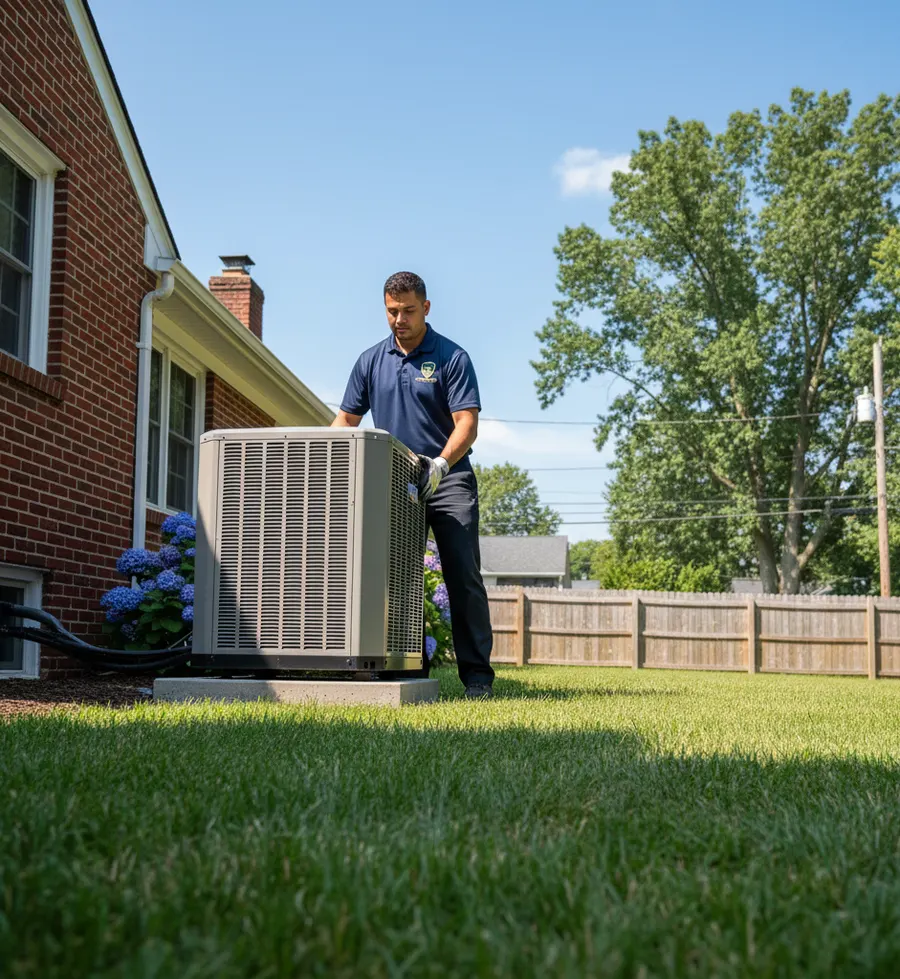
6. Do not forget the AC outside
Your AC condenser sits in the yard all winter collecting leaves.
- Clear leaves and sticks from around and on top of the unit
- Trim plants back so there is a couple of feet of open space
- Skip wrapping it in plastic. That traps moisture. A board on top to keep leaves out is fine
7. What to leave to a Pro
A homeowner check catches the easy problems. A professional tune up goes further: cleaning the burners and flame sensor, checking the ignition, testing safety controls, inspecting the heat exchanger area and the vent, and checking the blower. A furnace that is cleaned and adjusted every year tends to run more efficiently and last longer, and small problems get caught while they are still small.
Every HandyPros maintenance plan includes an annual furnace and AC condenser tune up, filters installed four times a year, priority scheduling when it does get cold, and 10% off any other handyman work. Plans start at $39 a month.
Rather have a Pro handle it?
HVAC tune ups, filters 4x a year and quarterly visits on a plan.
Quick answers
How often should I change a 1 inch furnace filter?
Generally every one to three months, more often with pets, allergies or heavy use. Plan members get one installed at every quarterly visit.
When should I book a furnace tune up in St. Louis?
September or early October, before the first cold nights. Once the weather turns, everyone calls at once.
Is MERV 8 good enough?
For most homes, yes. Higher MERV filters catch finer particles but can restrict airflow on some systems, so check with your Pro first.