Fall is the last good chance to get the outside of your house ready for winter. Water is the enemy: gutters that overflow, downspouts that dump next to the foundation and gaps that let rain and cold air in. Most of this list is a weekend morning.
1. Gutters
Clean them after most of the leaves have come down, which in St. Louis is often November. If you have a lot of trees, plan on a second pass.
- Scoop out leaves and debris
- Run a hose through to check water flows to the downspouts
- Look for sagging sections, loose hangers and leaking seams
2. Downspouts
A downspout that empties right at the foundation sends water toward the basement. Make sure each one empties well away from the house, using an extension or splash block if needed.
3. Roof, soffit and fascia
From the ground, with binoculars if you have them, look for missing or lifted shingles, damaged flashing and soft or rotted soffit and fascia boards. Small damage is a quick patch now and a bigger repair after a winter of rain and snow.
4. Windows, doors and caulk
- Check caulk around windows and doors for cracks and gaps
- Check weatherstripping on exterior doors for daylight and drafts
- Make sure storm doors and screens close and latch
5. Decks and concrete
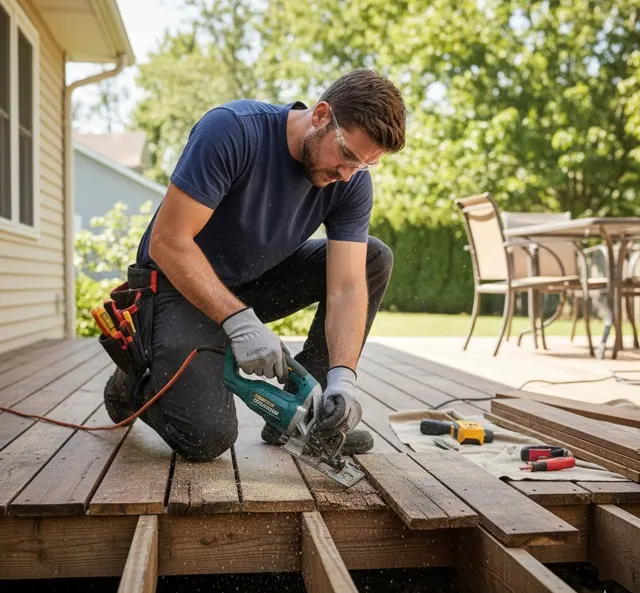
Sweep leaves off the deck so they do not hold moisture against the boards. Look for loose boards, popped nails and wobbly railings. Cracks in driveways and walks let water in, and freeze and thaw cycles make them bigger, so patch and seal them while the weather allows.
Rather stay off the ladder?
Gutters, siding, soffit, fascia, roof patches and decks.
Quick answers
When should gutters be cleaned in St. Louis?
After most leaves have dropped, often November, with a second pass if you have many trees.
How far should downspouts drain from the house?
Well away from the foundation. An extension or splash block helps carry the water out.
Does HandyPros do gutters and roof patches?
Yes. Gutters, siding, soffit, fascia, roof patching, decks and concrete patching are part of our exterior work.